|
The conductor Raymond Paige wrote an article entitled, “Why Not Women in Orchestras?” which appeared in the January 1952 issue of Etude. He is supportive and forward-looking, in a 1950's sort of way– meaning that modesty and attractiveness continue to rear their heads throughout his arguments: “The girl instrumentalist who looks forward to employment in a ranking symphonic organization today, will find that the decisive factors are musicianship and character, and not at all the fact of her being a girl... character is of equal value with musicianship, and auditions are calculated to probe the candidate’s self as well as her playing. The girl who is out for a gay time won’t get very far-- neither will the one with a pugnacious determination to ‘put men in their place.’ The right type is neither too vivacious nor too austere, but a balanced, responsible, right- thinking, right-acting human being with her eyes and her mind on the job... Ideally, the girl who wants orchestral work should be told to play whichever instrument she likes best. In some cases, however, the ideal must be tempered with the practical. This means that instruments requiring physical force are a dubious choice, partly because women lack the strength for them, partly because the spectacle of a girl engaging in such physical exertions is not attractive. There are women who play the heavier brasses, the contra-bass, the big drum, but their employment chances are slimmer. The orchestral manager, thinking in terms of full audience enjoyment, is reluctant to hire a player whose appearance gives off a feeling of forcing or of incongruity.” So where are we today? Certainly, looking at the experiences of women like Abby Conant (http://www.osborne-conant.org/ladies.htm), and reading comments made by members of the Vienna Philharmonic in 1996 that Herr Rudorff would have endorsed in 1881, it seems like nothing has changed. In reality, though, women are actively accepted in most major orchestras and certainly as soloists. And that brings me back to the start of this talk, flipping through cd’s in the record store. So let's compare some images of contemporary men and women soloists. Two recent recordings of Vivaldi's "Four Seasons": 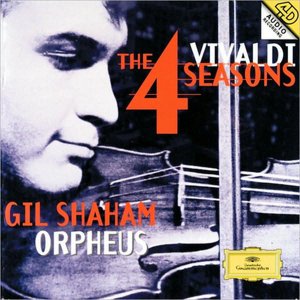 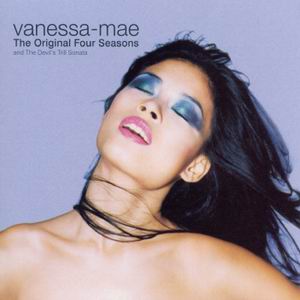 And solo Bach: 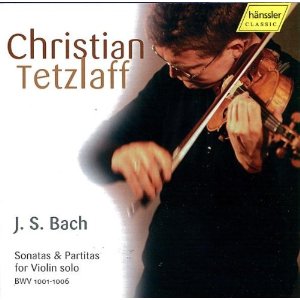 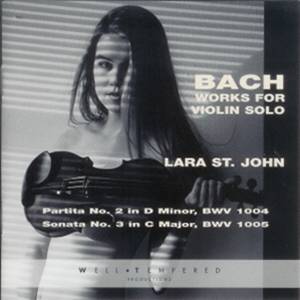 And no, it's not just string players: 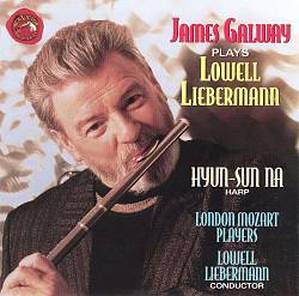 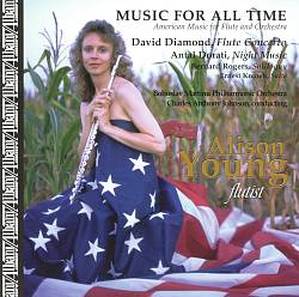 But violinists may be leading the pack... 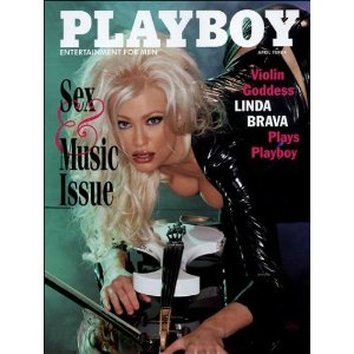 Now, I have to admit to stacking the deck here. At this writing (2012), things have changed quite a bit from when I originally wrote the essay in 1999. I see many fully-clothed women on their cd covers now, and quite a bit more simpering from the men (check out http://www.myplaydirect.com/joshua-bell/items/album, for example). But I have yet to see a classical cd cover of a man selling his body in the same way that these, and many others, do for women. While the above pictures are the blatant extreme, there is often a more subtle language at play as well, that can be seen in the next two: 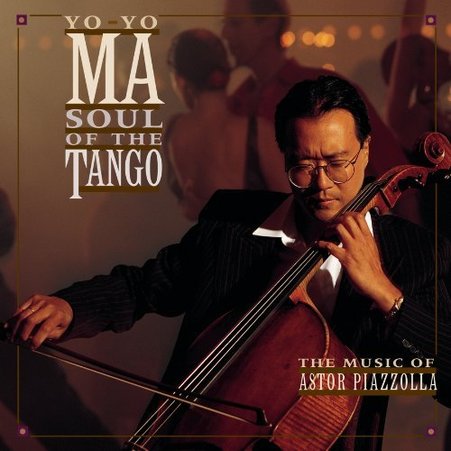 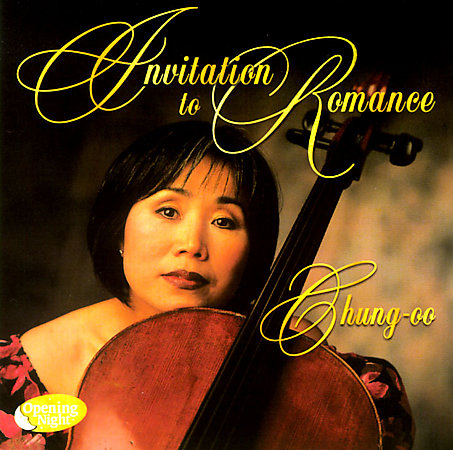 These are two comparable cd’s, each exploiting a more "popular" approach to classical music. Look at the difference in the presentation of the two cellists. The female is passive, gazing into the camera, asking to be noticed. She is not actively engaged in music-making. The male is playing and not beseeching his audience for attention; the indirect look shows his focus on the task at hand. In all these (admittedly carefully selected) images, the females use their instruments as props to highlight their sexuality/vulnerability (or in the case of Vanessa Mae, the instrument isn't even shown). The men use them as tools of the trade, demonstrating their mastery and seriousness of intent. They show the music as the most important element, not the physical appeal of the performer.
All the artists shown have reached a high level of achievement in their careers. Why aren't the women shown in equally powerful or engaged positions? Women have come a long way towards full acceptance as performers. But in being presented the way they are above, I ask you to consider: Is this true progress? Or is it the fulfillment of Rousseau's dream?
0 Comments
|
Categories
All
|
 RSS Feed